

Sample listing
1 Bedroom · 1 bed · 1 bath
Available Sep 8 · 1–12 months
₩1,650,000/ month
Est. ₩4,950,000 total for 3 months
Fully furnishedUtilities included
Finding homes
South Korea
Fast, connected and surprisingly easy to live in once you learn the rules
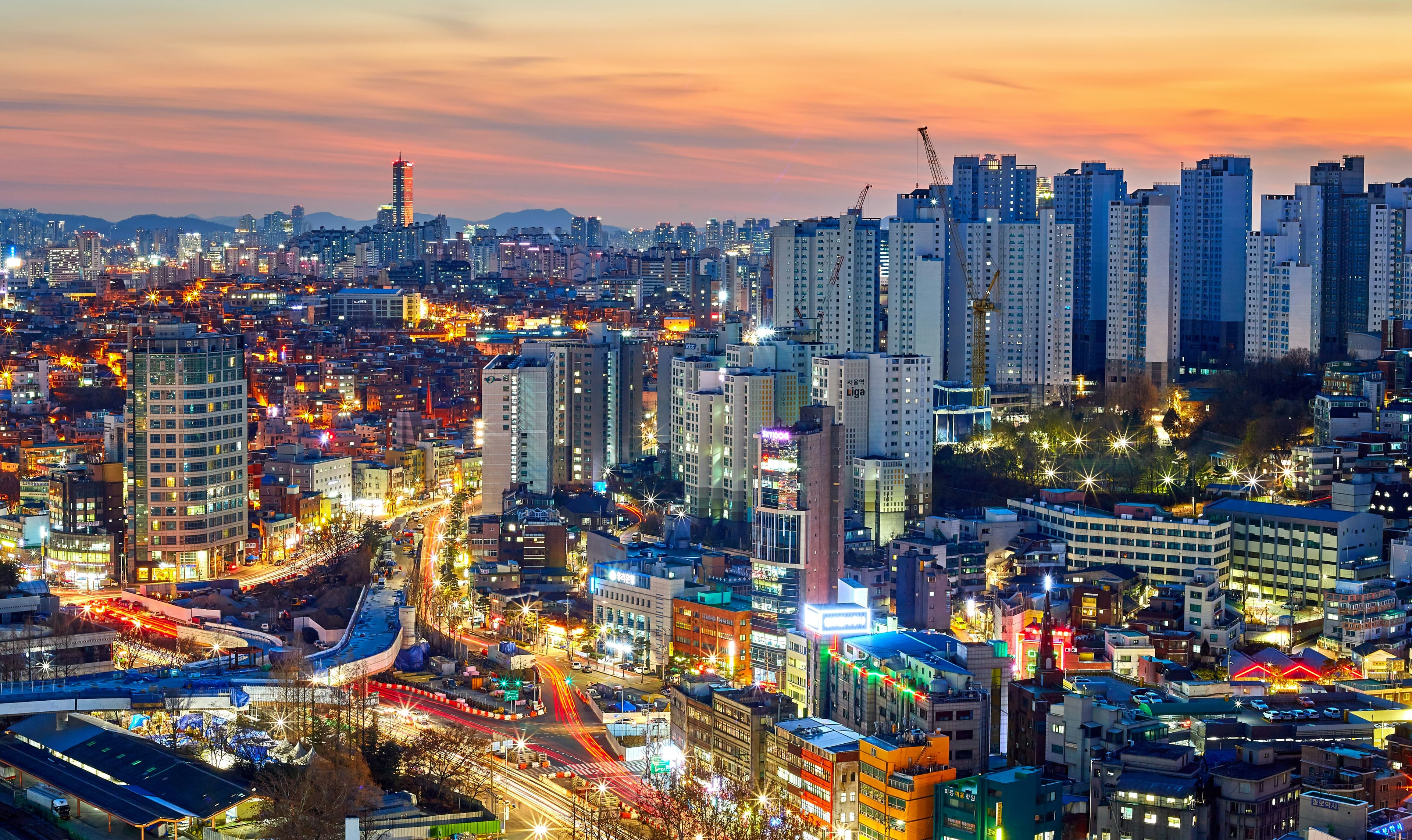
Seoul is the kind of city that makes everyday logistics feel effortless until the housing deposit, language barrier or midsummer humidity catches you off guard. The subway is excellent, neighbourhoods are genuinely different from one another, and late-night convenience is real, which makes the city particularly good for students, relocations, working holidays and people trying life in Korea for a few months.
The basics
English is common on transit, major signs and in internationally oriented neighbourhoods, but housing, administration and everyday services can still become Korean-first very quickly.
You can function in Seoul without fluent Korean, but the difference between visiting Seoul and actually living here becomes obvious when you start dealing with landlords, banks, clinics, deliveries and government paperwork.
Visa-exempt periods are nationality-specific. Some passports receive a different stay period, and K-ETA requirements also depend on nationality.
The live median of furnished Plextell homes in Seoul, not the city’s traditional wolse market. In 2026, ordinary one-room transaction benchmarks can look much cheaper because they frequently assume a substantial deposit and may not include furnishings or flexible terms.
The Han River cuts the city into north and south, and your daily life can stay almost entirely on one side of it.
Jongno and Jung-gu carry the older historic and administrative core, while Gangnam and Seocho feel newer, wider and more business-focused.
Neighbourhoods such as Hongdae, Seongsu, Yeouido and Jamsil operate almost like their own city centres.
The subway connects all of it extremely well, but a transfer-heavy journey can still eat an hour.
Distances on a map can also be deceptive because rivers, hills and the position of subway lines matter.
For everyday life, choosing the right station is often more important than choosing the most famous neighbourhood.
The honest version
Cost of living
A practical 2026 planning range for furnished, foreigner-ready studios and officetels in well-connected parts of Seoul. Prime Gangnam, Seongsu and newer buildings can go higher.
Do not compare the monthly rent alone. Korean rentals frequently involve a separate deposit and building management fee, and a larger deposit can sometimes reduce the monthly rent.
This is a 2026 furnished and flexible-stay planning range rather than a Seoul-wide official median. Larger apartments, premium buildings and central locations can easily exceed it.
The traditional Korean market often advertises homes using a deposit-plus-monthly-rent structure, so two apartments with similar monthly rent can require very different amounts of cash upfront.
The adult Seoul subway base fare paid with a transit card is ₩1,550 as of August 2026, with distance-based additions on longer journeys.
From September 1, 2026, Seoul’s Climate Pass replaces the 30-day prepaid Climate Card for residents. The standard adult flat-rate benchmark is ₩62,000, with separate eligibility and registration rules.
Use this as an August 2026 planning range rather than an official food-basket figure.
Cooking Korean staples and shopping at local supermarkets can keep you near the lower end. Imported products, premium fruit, prepared food and frequent convenience-store stops move the number up quickly.
KT’s foreigner-friendly 30-day prepaid plans sit around this range as of August 2026. Resident contracts, promotions and lower-cost MVNO plans can be cheaper once you are properly set up.
A reasonable 2026 range for a basic everyday meal. Korean barbecue, trendier restaurants, drinks and anything in a polished Gangnam or Seongsu dining room can turn this into a very different number.
A realistic solo month
A practical 2026 monthly lifestyle budget including furnished rent, ordinary building costs, groceries, transit, phone and a reasonable amount of eating out. The housing deposit is separate. A larger or newer home in Gangnam, Seongsu, Yongsan or another premium area can push this above the range very quickly. The deposit is still separate. Sharing can cut the housing part of your budget significantly. Just confirm that the arrangement is legitimate, that subletting is permitted where relevant, and whether you can complete the residence-registration steps your immigration or lease situation requires.
81.8%
2025 Seoul Survey, published Feb. 2026. Share of surveyed foreign residents who said they would recommend living in Seoul.
A lot of foreign residents say they do.
In the 2025 Seoul Survey, published in February 2026, foreign residents gave their overall quality of life in Seoul 7.62 out of 10.
The same survey found that 81.8% of foreign residents said they would recommend living in Seoul, while 75.0% said they intended to continue living in the city.
Who moves here
People arrive in Seoul with very different plans, and a lot of those plans only make sense for a few months at first.
Maybe you are at Yonsei for one semester. Maybe you are doing an exchange at Korea University, studying Korean, completing graduate research or staying after your dorm contract ends.
Seoul is much easier when you live on the right subway line for campus. Saving a little money on rent can stop feeling clever when you are making a 70-minute trip to a 9 a.m. class.
A furnished stay also means you do not need to buy a bed, desk, cookware and half an apartment for a semester that ends four months later.
Your company wants you in Seoul for a summer, a placement or one project. You want somewhere more normal than a hotel but do not need the complexity of furnishing a Korean apartment from scratch.
Start with the office location. Gangnam, Yeouido, Gwanghwamun, Guro and Seongsu can produce completely different commute strategies.
In Seoul, being one direct subway line away from work can be worth more than being geographically close.
You have the job. You do not necessarily know the city yet.
A temporary furnished home gives you time to learn which side of the Han River you actually want to live on, how your commute behaves at 8:30 a.m. and whether you prefer Gangnam convenience, Yongsan access or somewhere quieter.
It also gives you breathing room before putting a much larger deposit into a traditional Korean lease.
Moving a family into Seoul involves more than finding the nicest apartment photos.
School location, commute, apartment size, elevators, parks, supermarkets and how far everyone travels each morning matter much more after the first week.
A flexible home can work as a landing point while you compare longer-term housing and decide which part of the city actually works for the whole household.
Seoul is almost unfairly convenient for remote work. Fast connectivity, cafés, coworking spaces, late-opening businesses and delivery make it easy to build a routine quickly.
The bigger questions are immigration and time zones. Korea’s F-1-D Workation status creates a real route for some qualifying foreign remote workers, but working for a Korean employer is a different immigration situation.
And if your team is in Toronto, New York or London, eventually someone is taking a meeting at an unpleasant hour.
You came because a two-week trip did not feel like enough.
A working holiday lets eligible young travellers from participating countries spend longer in Korea while taking permitted work, travelling and actually building a routine here. The exact age limit and employment conditions depend on your nationality.
Your first neighbourhood probably does not need to be your final one. Seoul makes more sense once you have lived here long enough to know which station, crowd and pace feel like yours.
Visa, work and housing rules
South Korea has real immigration and housing rules behind the convenience. Your passport, visa, purpose of stay, lease structure and residence-registration status can all change what applies to you.
01
The length of time you can visit South Korea without a visa depends on your passport. Around 90 days is common for many visa-exempt nationalities, but it is not a universal rule, and some passports receive shorter or longer periods.
K-ETA requirements also depend on nationality. South Korea extended temporary K-ETA exemptions for designated visa-exempt countries through December 31, 2026, so check your own passport rather than assuming someone else’s entry rules apply to you.
Visitor status is for visiting. It does not automatically give you permission to take a job in South Korea.
02
International students normally need the visa category that matches the type and length of their program. Degree students commonly use a D-2 category, while exchange students can fall under D-2-6.
The school, course, financial requirements and documents you need depend on the exact category. Being admitted to a university does not by itself replace the immigration process.
Part-time work is also regulated. Students should confirm whether their visa, Korean-language level, university approval and immigration permission allow the work they intend to do before starting a job.
03
There is no single visa for everyone who wants to spend a few months working from Seoul.
The useful route depends on whether you are travelling on a working holiday, working remotely for a foreign company, or taking a job in the Korean labour market.
No automatic 30-day threshold
Seoul does not use the same kind of municipal 28-day or 30-day dividing line that some North American cities use for short-term rentals.
A stay of one month or more may be structured as a residential lease, but the number of nights alone does not determine your legal rights.
South Korea’s Housing Lease Protection Act protects residential leases, but the Act also contains an exception where it is obvious that a lease is for temporary use.
That distinction matters for furnished medium-term accommodation. A three-month home being used as someone’s actual residence and a clearly temporary lodging arrangement should not automatically be treated as legally identical just because both are longer than 30 nights.
For an ordinary protected residential lease, Korean law gives tenants protections that cannot be understood from the contract length alone.
A lease term agreed for less than two years can generally be treated as lasting two years for statutory tenant protection, while the tenant can still rely on the shorter agreed term. This is one reason the temporary-use exception can matter for genuinely temporary housing.
Foreign nationals can receive protections under the housing lease framework when the required immigration and residence-reporting steps are completed.
Alien registration or reporting a change of place of stay can have the legal effect of the residence move-in reporting used by Korean nationals. Obtaining a fixed date can also be important for preferential repayment rights over a housing deposit.
Under Seoul’s housing lease reporting system, qualifying residential contracts generally need to be reported within 30 days of signing when the deposit exceeds ₩60,000,000 or monthly rent exceeds ₩300,000. Those thresholds remain relevant in 2026.
A furnished medium-term home can easily cross the monthly-rent threshold, so do not assume the reporting system only matters to traditional two-year apartments.
General information only — not immigration, tax or legal advice.
Visa eligibility depends on nationality, status, income, intended activities and individual circumstances. Housing protections depend on the property, contract and real nature of the occupancy. Rules and thresholds can change, so confirm current requirements with the relevant Korean authority before travelling, working, studying or signing a rental agreement.
Sources
Visa Navigator · Entry status · Study and work categories
Housing Lease Protection Act · Current Korean legislation
Housing in Seoul · Jeonse and wolse · Foreign-resident guidance
Verified homes
Every home is verified before it goes live, let on a residential lease, and priced by the month with no brokerage fee.
1 Bedroom · 1 bed · 1 bath
Available Sep 8 · 1–12 months
Est. ₩4,950,000 total for 3 months

Studio · 1 bed · 1 bath
Available Sep 20 · 1–8 months
Est. ₩3,750,000 total for 3 months

2 Bedroom · 2 bed · 2 bath
Available Oct 1 · 3–12 months
Est. ₩8,550,000 total for 3 months
Before you decide
Very easily.
For many people, owning a car in central Seoul would actually make everyday life more complicated.
The subway is extensive, buses fill many of the gaps, taxis are relatively easy to use, and dense neighbourhoods mean your supermarket, café, gym, clinic and restaurants may all be within walking distance.
The important question is not whether a home is in Seoul. It is which station it is near.
A place that looks only a few kilometres from work can still involve two transfers and 50 minutes of commuting.
Open the transit route before you book the apartment. Seoul rewards people who choose the right subway line.
It depends on which part of Seoul you are talking about.
Housing can absolutely be expensive, particularly if you want to live alone in a modern furnished apartment in Gangnam, Seongsu, Yongsan or another high-demand district.
The bigger surprise for many newcomers is the deposit.
A traditional Korean wolse contract normally combines a deposit with monthly rent, and increasing the deposit can sometimes lower the monthly payment. Jeonse goes much further and relies on a very large lump-sum deposit instead of ordinary monthly rent.
That makes comparing Korean housing to a simple monthly rental back home surprisingly difficult.
Once housing is handled, everyday Seoul can feel much more manageable. Public transit is inexpensive for a major global city, and you can still find straightforward Korean meals for around ₩10,000.
But cafés, delivery, drinks, taxis, shopping and one more late-night meal have a way of appearing in your budget every day.
Do not build your Seoul budget using the gross number in your employment contract.
South Korea uses progressive national income-tax rates. Under the current structure used in 2026, taxable income starts at 6% up to ₩14 million, then moves through 15%, 24%, 35%, 38%, 40%, 42% and 45% brackets as the tax base increases.
Those are marginal rates on taxable income, not a percentage applied to your entire salary.
Local income tax is also generally calculated in addition to national income tax. For ordinary withholding, the local income-tax amount is commonly 10% of the corresponding national income tax.
Employees may also see Korean social-insurance contributions such as national pension, health insurance, long-term care insurance or employment insurance, depending on nationality, visa status, employment arrangement and applicable agreements.
Foreign residents can have additional tax-residency, treaty or flat-tax considerations, so two people earning the same salary do not necessarily take home exactly the same amount.
For everyday life, Seoul generally feels very safe for a city of its size.
Late-night public transit, busy commercial streets, convenience stores and people being outside at almost every hour can make the city feel comfortable even when you are living alone.
That does not mean you stop paying attention. Crowded nightlife districts, scams, harassment, road traffic and ordinary city crime still exist.
And when you are choosing housing remotely, safety is not only about crime. The building itself matters.
Check:
Yes, especially if you are willing to make the first move socially.
Seoul has huge populations of university students, foreign residents, working holiday makers, language students, corporate transferees and young professionals who arrived without an established social circle.
It is also unusually easy to do things alone. Cafés, restaurants, cinemas, shopping and public transit do not require you to organize your entire day around another person.
Meeting people is the easy part. Turning those people into actual friends can take more effort.
Language exchanges, sports, university clubs, coworking communities, hobby classes, professional groups and friends of friends are usually more reliable than waiting for a social circle to magically appear.
The city is enormous, so the other challenge is distance. Your new best friend somehow always lives 57 minutes away.
To arrive? No.
To make life noticeably easier? Absolutely.
Subway stations have English signage, major attractions are easy to navigate, translation apps are good and many younger Koreans have some English ability.
That can make a visitor think Seoul is almost completely English-friendly.
Then you try to call a landlord. Or explain something at a clinic. Or set up a service whose website requires a Korean identity check. Or speak to a delivery driver who cannot find the building entrance.
You do not need to become fluent before moving. Learning Hangul, numbers, addresses and basic everyday phrases gives you an enormous return for surprisingly little effort.
The difference between zero Korean and basic Korean is much bigger than the difference between intermediate Korean and perfect Korean.
You get both.
Seoul has a real four-season climate. Korea Meteorological Administration climate normals put Seoul’s January average temperature around -1.9°C and August around 26.1°C.
Winter is cold and generally dry. The temperature itself is manageable with a proper coat, but wind and long periods outside can make it feel worse.
Summer is the season that surprises people who only prepared for Korean winter.
July and August are hot and humid, and the summer monsoon brings a large share of the city’s annual rainfall. Seoul’s July normal relative humidity is around 76%.
Air conditioning becomes less of a luxury and more of a personality trait.
Spring and autumn are the reward. They can be genuinely beautiful, which is why everyone suddenly wants to be outside at exactly the same time.
There is no universally best neighbourhood in Seoul. Your commute and lifestyle should choose it for you.
Start here if work is the main reason you moved. Teheran-ro and the surrounding Gangnam business districts put offices, restaurants, gyms, medical services, shopping and multiple transit options close together.
It is efficient and easy to arrive into. It is also expensive, busy and not the place to move if your dream Seoul involves tiny historic alleys outside your window.
Good for students, working holiday makers and anyone who wants an instant social life.
Hongdae is louder and later. Yeonnam is calmer, café-heavy and more residential. Together they give you one of the easiest parts of Seoul to enjoy before you understand the rest of the city.
Fashion, design, cafés, startups, converted industrial spaces, Seoul Forest and approximately one million pop-ups.
It is a very good fit if you work in a creative industry or want modern Seoul rather than traditional Seoul. The downside is that everyone else discovered it too, and housing prices reflect that.
This is the obvious student answer for western Seoul. Yonsei, Ewha and Sogang are all close, and the neighbourhoods are built around people who study, eat cheaply and stay out later than they planned.
You will find more small units and older buildings than in a new Gangnam officetel, but that can also make the area more practical for a semester.
Choose this side of the city if you want central access with a more residential everyday routine.
Yongsan has major transport links and international communities, while Ichon gives you easier access to the river and a calmer residential environment. It works especially well for professionals, couples and families staying longer.
Near the university. Seriously.
For Yonsei University, Ewha Womans University or Sogang University, Sinchon and the surrounding western neighbourhoods are obvious starting points.
Hongik University students naturally have Hongdae nearby. Korea University students should look around Anam and Line 6. Hanyang University students often focus around Wangsimni and the eastern Line 2 corridor.
Seoul National University is farther south, and the campus itself is large, so simply finding an address labelled “Gwanak” does not guarantee a painless commute.
Students at Sungkyunkwan University also need to check which campus they actually attend rather than assuming the university name tells them where to live.
The rule is simple: check the exact campus building and the door-to-door public-transit time before signing anything.
Very, if your industry lines up with what the city does well.
Seoul is a major center for technology, gaming, electronics, finance, consulting, e-commerce, media, entertainment, advertising, beauty and fashion.
Gangnam and Teheran-ro are major business and technology hubs. Yeouido is closely associated with finance. Guro and Gasan have large digital and business clusters. Sangam has a strong media presence. Seongsu has become increasingly visible for startups, fashion and consumer brands.
Pangyo is another enormous technology hub, although technically outside Seoul in Seongnam. If your office is there, choosing your Seoul neighbourhood without checking the commute would be a mistake.
The harder side is work culture. Team expectations, hierarchy, language and hours vary enormously by company, and an international startup can feel completely different from a traditional Korean corporation.
From a lifestyle perspective, extremely.
Fast internet, dense neighbourhoods, cafés, coworking spaces, delivery and reliable transit make it unusually easy to build a remote-work routine.
You can work from home in the morning, take the subway across the city for lunch, finish the afternoon from a café and still have an entire evening left.
The legal side is what matters. South Korea now has an F-1-D Workation route for qualifying foreign remote workers, but eligibility includes employment-history and income requirements.
It also does not give you permission to casually switch into working for a Korean company.
And then there is the time zone. Seoul is wonderful until the recurring New York meeting appears at 11 p.m.
Imagine this.
You leave your officetel at 8:10 and walk to the subway. There is already a convenience store, coffee shop, bakery and pharmacy before you reach the station.
You tap into the subway, change lines once and arrive at work without thinking about parking.
Lunch is fast. Coffee somehow happens again immediately afterward.
After work, you take the train to Seongsu to meet a friend, walk through Seoul Forest and end up eating dinner nearby.
At 10:30 p.m. the neighbourhood still feels completely awake.
On Saturday you might hike in the morning, shop in the afternoon, sit beside the Han River at sunset and finish the night in Hongdae.
And on Sunday you realize you have started measuring every location by how many subway transfers it requires.
The housing deposit is usually near the top of the list.
A newcomer sees ₩700,000 monthly rent and thinks they found an incredible deal. Then they notice the ₩10,000,000 deposit. Or ₩30,000,000. Or much more.
The second surprise is how much everyday infrastructure assumes you have already become a resident.
A Korean phone number, foreign-resident registration and local payment method can suddenly make services that felt awkward during your first week become almost effortless.
People are also surprised by how local their life becomes. Seoul has more than enough to explore for years, but eventually you still have your station, your coffee shop, your supermarket and your three default dinner places.
And yes, the trash and recycling system will probably require more thought than you expected.
Housing can be confusing before you understand deposits, management fees, officetels, villas, wolse and jeonse.
The language barrier shows up most strongly exactly when something important goes wrong.
Summer humidity is exhausting. Winter can be bitterly cold. Air quality can also become a consideration on some days.
The city moves quickly, which is exciting until you are the person who does not understand what everyone else seems to already know.
And because Seoul is enormous, choosing the wrong location can quietly take ten hours out of every week in commuting.
Convenience is the obvious answer.
Public transit works. Food is everywhere. Delivery is fast. Cafés stay open. Convenience stores genuinely are convenient.
The city is also much more varied than the glass towers in photos suggest.
You can spend one day around palaces and old neighbourhoods, another in Gangnam towers, another in Seongsu warehouses and another hiking without leaving the metropolitan area.
It is safe enough for many people to feel comfortable building a life alone, social enough that there is always something happening and connected enough that the rest of Korea is easy to explore.
And once the city starts making sense, it becomes dangerously easy to imagine staying longer than you planned.
Very.
Seoul works particularly well when the entire point of the move is that you do not know whether it is permanent.
Come for one semester. Spend six months on a working holiday. Take a temporary assignment. Work remotely for a season if your immigration status allows it. Move first while you decide whether the Korean job becomes a longer chapter.
A few months is enough time for Seoul to stop feeling like a trip.
You learn your subway line. You find a barber or salon. The cashier at the convenience store starts recognizing you. You stop translating every restaurant menu.
Then you can decide whether you actually want to stay rather than trying to answer that question before you have lived here.