
Illustrative home · view current Ontario inventory

Sample listing
1 Bedroom · 1 bed · 1 bath
Available Dec 20 · 1–9 months
$2,650/ month
Est. $7,950 total for 3 months
Fully furnishedUtilities included
Finding homes
Canada
All the energy of a big city, easier to settle into.
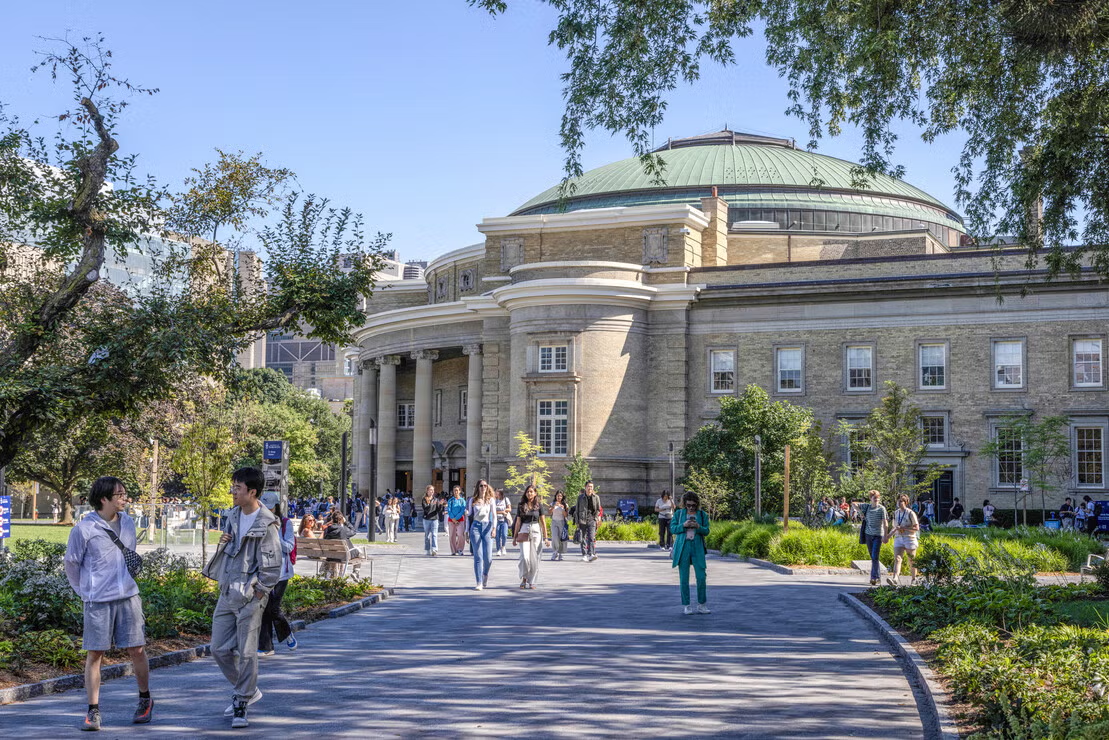
Toronto is widely described as Canada's largest, most multicultural city, serving as a vibrant economic and cultural powerhouse with a distinct collection of diverse neighbourhoods.

The basics
Canada is officially bilingual at the federal level, but Ontario runs on English. You will meet French on packaging and federal paperwork rather than in daily conversation.
Most visitors can stay in Canada for up to six months, although the exact period is set when you enter the country. Entry requirements depend on your passport.
The live median of furnished Plextell homes here, not a market average. Ordinary Toronto one-bedroom asking rents averaged about CA$2,234 a month in July 2026; furnished medium-term homes can differ considerably.
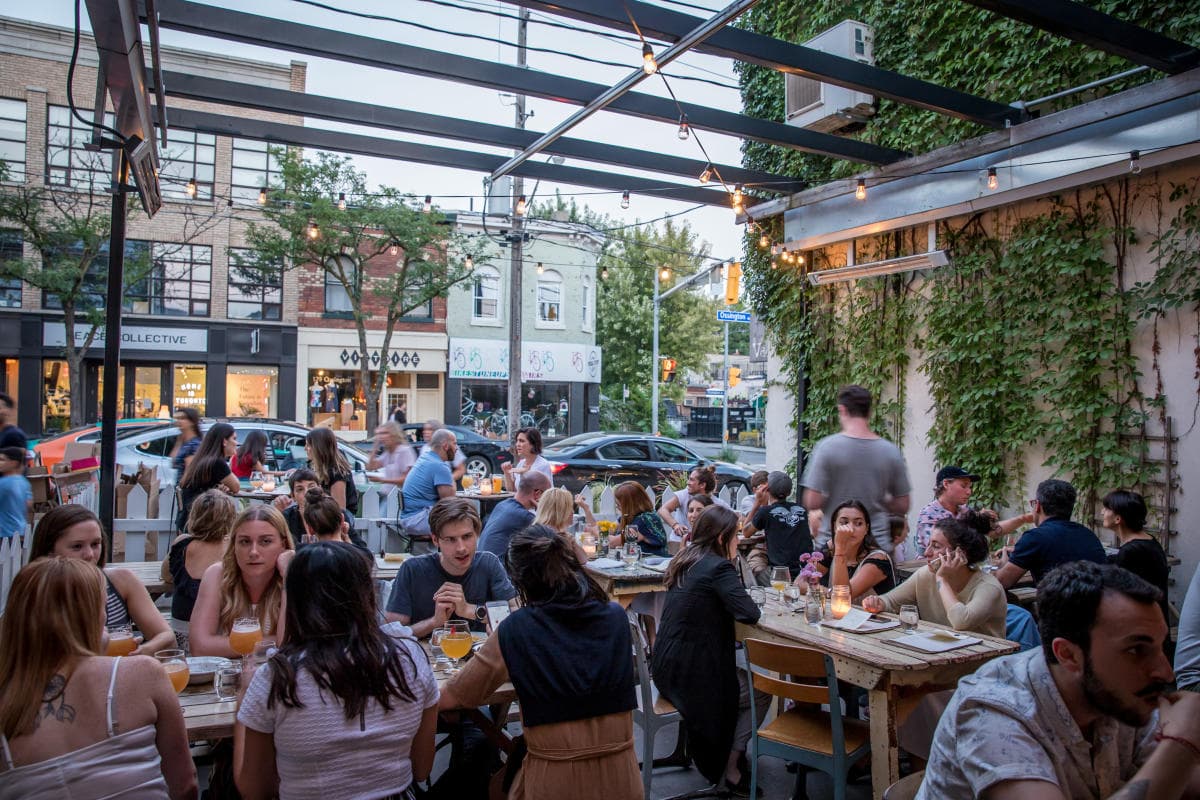
You can spend the morning working downtown, grab Korean food in North York, meet friends for coffee on Ossington and end the night by the waterfront.
But the city is also very neighbourhood-based.
Living in Downtown Toronto feels completely different from living in Midtown, North York or The Beaches.
That’s why saying “I live in Toronto” doesn’t really tell you much.
Where you live can completely change your experience.


The honest version
What life looks like






Cost of living
Central or newer buildings can cost more, but studios around the city can still be found around this range. Furnished and flexible stays usually carry a premium over a standard lease.
Expect more downtown, in newer condo buildings, or for very short stays. Toronto’s broader 1-bedroom asking-rent benchmark is currently around CA$2,100–2,250 before considering a furnished or flexible-stay premium.
From September 1, 2026, use the same eligible payment method and you stop paying after 47 paid TTC trips in the calendar month.
Maximum for a frequent adult TTC rider: about CA$155/month.
Cook most of the time and shop at places like No Frills, FreshCo or Asian supermarkets and you can stay toward the lower end.
Shop premium, buy lots of prepared food, and suddenly this section has its own budget.
The City of Toronto’s 2026 food-basket data also supports the idea that food costs vary substantially by household rather than everyone needing $500+ per person.
A basic prepaid or bring-your-own-phone plan is enough for most newcomers.
Before you accidentally turn “just dinner” into dinner, drinks, dessert and an Uber home.
A realistic solo month
Rent, groceries, transit, phone and a reasonable amount of going out. A newer downtown condo, frequent Uber Eats and weekends out can obviously push this higher. Sharing? You can spend much less. A room in a shared home can bring your total monthly budget down significantly.
69%
City of Toronto resident survey, 2025. It was 64% the year before.
Mostly, yes.
In the City of Toronto’s 2025 resident survey, 69% of Torontonians rated the city’s quality of life as good or very good, up from 64% the year before.
People tend to love the parks, neighbourhoods, diversity and access to things to do.
Who moves here
People come to Toronto for all kinds of reasons — and not everyone knows exactly where they’ll be a year from now.
You do not have to be new to Toronto to need a temporary place.
Maybe you are here for one semester, starting co-op, changing campuses, finishing school, or simply not sure where you will be next year.
A flexible stay gives you somewhere to live without deciding your entire next year today.
Long enough that a hotel makes no sense. Short enough that a traditional lease can become a problem.
You need somewhere furnished, practical, and close enough to work that your internship does not begin and end with a commute.
Start the job first. Figure out the neighbourhood later.
A temporary home gives you time to learn your commute, explore Toronto, and decide where you actually want to settle before making a longer commitment.
Sometimes the whole family moves before everything else is figured out.
You might be waiting for a permanent home, exploring neighbourhoods, starting a new job, or getting the kids settled into a new routine.
A furnished place gives everyone somewhere to land while the bigger decisions happen.
Keep the job. Change the view.
If your work arrangement allows you to work remotely from Canada, Toronto gives you plenty of neighbourhoods, cafés, coworking spaces, and everyday city life to build a temporary routine around.
You came to work, travel, meet people, and see what living in Canada actually feels like.
Your job may change. Your neighbourhood may change. Your plans probably will too.
A flexible home makes sense when keeping your options open is part of the plan.
Visa, work and housing rules
The rules depend on why you are in Canada, what you plan to do while you are here, and the type of home you are renting. Here is the practical version.
01
Most visitors are allowed to stay in Canada for up to six months, but a border services officer can authorize a shorter or longer stay.
The document you need to travel to Canada depends on your citizenship and travel document. Depending on your situation, that may be a visitor visa, an eTA, or simply a valid passport.
A visitor visa or eTA lets you travel to Canada. It does not, by itself, give you permission to work in Canada.
02
Most foreign nationals studying in Canada for more than six months need a study permit.
If your entire program lasts six months or less and can be completed within your authorized stay, you generally do not need a study permit. There are exceptions, so always check your situation with IRCC.
Eligible international students with the appropriate study-permit conditions may currently work up to 24 hours per week off campus during regular academic terms and unlimited hours during scheduled school breaks. Not every student automatically qualifies to work.
03
International Experience Canada, or IEC, allows eligible young people from participating countries and territories to work and travel in Canada.
Your age limit, available categories, length of stay and participation rules depend on your citizenship. Most participating ranges are between 18 and 35, with lower age limits for some countries.
There are three main IEC categories:
04
This one needs an important distinction.
Canada allows digital nomads who are not entering the Canadian labour market to work remotely while in Canada as visitors. This can include working for an employer outside Canada or, in qualifying circumstances, working remotely for yourself while your business activity remains outside the Canadian labour market.
That does not mean visitor status lets you take a regular job with a Canadian employer.
Most foreign nationals who want to work in the Canadian labour market need work authorization.
28 days or more
Toronto legally defines a short-term rental as a rental for fewer than 28 consecutive days.
That means a stay of 28 consecutive days or more is outside Toronto’s municipal short-term-rental regime. A typical 30+ day stay therefore isn’t treated as a Toronto short-term rental under those city rules.
But this is the important part:
28 days does not automatically determine your tenant rights.
Ontario’s Residential Tenancies Act (RTA) applies to most residential tenancies, but the Act also contains exemptions, including certain accommodation intended for travelling or vacationing guests or temporary accommodation in specified types of establishments.
Whether the RTA applies depends on the actual nature of the accommodation and occupancy, not simply how many nights were booked.
For most residential tenancies:
The booking platform, host and renter cannot simply choose to “opt out” of the RTA if the law says it applies. Terms that conflict with the Act can be void.
General information only — not immigration or legal advice.
Immigration eligibility depends on citizenship, status, intended activities and individual circumstances. Rental protections depend on the property and nature of the occupancy. Rules can change, so confirm current requirements with the relevant government authority before travelling, working, studying or signing a rental agreement.
Sources
IEC eligibility · Study permits · Visitor status · Work authorization
Short-Term Rental Regulations
Residential Tenancies Act, 2006 · Ontario Standard Lease
Verified homes
Every home is verified before it goes live, let on a residential lease, and priced by the month with no brokerage fee.
Illustrative home · view current Ontario inventory
1 Bedroom · 1 bed · 1 bath
Available Dec 20 · 1–9 months
Est. $7,950 total for 3 months
Illustrative home · view current Ontario inventory

Condo · 2 bed · 2 bath
Available Sep 1 · 2–12 months
Est. $10,050 total for 3 months
Before you decide
For a lot of people, yes.
If you live near a subway station, streetcar line or major bus route, you can easily build your daily life around public transit. Downtown is also very walkable. You can often have groceries, cafés, restaurants, gyms and transit within a few blocks.
The further you move outside central Toronto, though, the more useful a car becomes.
So before choosing a place, don’t just look at the rent. Open the map and check how long it actually takes to get to school, work or anywhere you’ll go regularly. A cheap apartment with a 70-minute commute can stop feeling cheap pretty quickly.
Short answer: yes.
Housing will probably be the biggest shock. Living alone in a nice condo downtown is very different from sharing a two-bedroom place in North York or living slightly further from the core.
Your lifestyle matters too. Toronto makes it very easy to spend money.
Coffee. Brunch. Uber Eats. Drinks. Concerts. Random $18 cocktails. Another coffee.
Suddenly your monthly budget looks very different.
The good news is that you can also live pretty normally without doing all of that every day. Groceries, public transit, cooking at home and choosing the right neighbourhood make a huge difference.
Less than the number in your job offer.
Employees in Ontario generally have federal and provincial income tax, CPP contributions and EI premiums deducted from their pay. How much you actually keep depends on your income and personal tax situation.
For 2026, Ontario’s provincial brackets start at 5.05%, while federal brackets start at 14%. Higher portions of income are taxed at higher rates.
Very rough rule: don’t build your Toronto budget using your gross salary. Look at estimated take-home pay first.
Overall, Toronto feels relatively safe for a large city. But like any major city, the experience changes depending on the neighbourhood, street and time of day.
If you’re choosing a home from another city or another country, don’t only look at photos of the apartment. Look at the actual block.
Check:
Sometimes two apartments five minutes apart can feel completely different.
Actually, yes.
A huge number of people in Toronto weren’t born in Toronto. People constantly arrive for school, jobs, internships, immigration, relationships and completely random life decisions. So being “new here” isn’t unusual.
You’ll probably meet other people who are also trying to figure out the city.
The harder part is making close friends. Toronto has millions of people, but that doesn’t automatically mean you’ll have a social circle. You usually have to make some effort.
Work. School. Sports. Fitness classes. Meetups. Community groups. Professional events. Friends of friends.
Once you start saying yes to things, the city gets much smaller.
No.
You obviously need enough English to manage everyday life, but Toronto is one of those cities where hearing multiple languages in one subway car is completely normal.
There are huge Korean, Chinese, Filipino, South Asian, Persian, Italian, Caribbean and many other communities across the city. Depending on where you live, you may even find grocery stores, restaurants, clinics and services in your first language.
You still want to improve your English if you’re planning to study or work here, but you definitely don’t need to sound perfect before arriving.
This is probably one of the first questions everyone asks.
Yes, it gets cold. Yes, it snows. Yes, there will probably be at least one morning when you step outside and immediately regret your life choices.
But Toronto doesn’t shut down because it’s winter. People still commute. Restaurants are open. Students still go to class. People still go out.
The biggest difference is having the right clothes. A real winter jacket changes everything.
Winter also feels very different depending on your routine. Walking 25 minutes every morning is one thing. Living three minutes from the subway is another.
There isn’t one “best” neighbourhood. There’s a best neighbourhood for what you want.
Best if you want convenience. You’re close to offices, universities, restaurants, nightlife, shopping and public transit.
It’s great for students, interns and young professionals who want to be in the middle of everything.
The trade-off? You’ll usually pay more for less space. And it can be busy.
A popular choice for people who want convenience without living right downtown. You’ll find plenty of condos, restaurants, grocery stores and subway access.
There’s also a large Korean and Asian community, especially around Yonge Street. It can feel more residential while still giving you easy access to downtown.
Midtown is a good middle ground. It’s generally calmer than downtown but still well connected.
Think residential streets, cafés, parks, restaurants and condo buildings around major subway stations. Good for people who want city life without feeling like they live directly inside the Financial District.
If your ideal weekend involves coffee shops, patios, vintage stores, restaurants and walking around neighbourhood streets, you’ll probably like the west side.
Queen West. Ossington. Little Italy. Roncesvalles. Parts of Parkdale.
The area tends to feel more creative and neighbourhood-focused.
The east side can feel slightly more relaxed. Leslieville, Riverdale, The Danforth and The Beaches are popular with people who still want city access but prefer a more residential feel.
You’ll find parks, local restaurants and quieter streets while still being connected to downtown.
That depends on the school.
If you’re studying at the University of Toronto, living downtown or somewhere along Line 1 usually makes life easier. If you’re at Toronto Metropolitan University, downtown access is extremely convenient. Students at York University may prefer areas closer to Line 1 further north.
But there’s one rule that matters more than almost anything else:
Don’t underestimate commuting.
A place that looks “close” on a Toronto map may still take 45 minutes door to door.
Very.
Especially if you work in finance, technology, consulting, healthcare, media, retail, professional services or startups. A lot of Canada’s biggest companies and organizations have major operations here.
There are also endless networking events, conferences and industry meetups.
The downside is competition. There are a lot of ambitious people here. That can either feel exciting or exhausting depending on your personality.
It can be great.
There are cafés everywhere, coworking spaces across the city and plenty of neighbourhoods where you can build a routine around working remotely. You could live somewhere quieter and still go downtown when you want the city energy.
The only danger is convincing yourself that buying a $7 latte every day counts as rent for your office.
Imagine this.
You leave your condo in the morning and walk five minutes to the subway. You grab coffee on the way. Twenty minutes later you’re downtown.
After work, you meet a friend for dinner in Koreatown. Then you take the streetcar west for drinks.
The next morning you work from home and walk to a nearby grocery store.
On the weekend, you go to a park, café, market, concert or spend three hours waiting for brunch because someone found the place on TikTok.
That’s a pretty normal Toronto experience.
Toronto is much bigger than it looks. People often underestimate travel time. North York to downtown can feel like a completely different city. The east side and west side can have totally different vibes.
Another surprise is how multicultural the city really is. You don’t just find international food in one “international district.” It’s everywhere.
And despite being a huge city, your actual life usually becomes very local. You’ll probably end up going to the same grocery store, same café, same subway station and same three restaurants every week.
The cost of housing. That’s the obvious one.
Then winter. Then commuting if you choose the wrong location. And sometimes the city can feel a little too busy.
Toronto rewards convenience. Living near the places you actually go can make your life significantly better. Choosing a home that saves you money but adds two hours of commuting every day may not be worth it.
The food is hard to beat. You can eat almost any cuisine you can think of.
The city is extremely diverse. There’s always something happening.
You can build a career here. You can study here. You can disappear into a quiet neighbourhood when you’re tired of downtown.
And because so many people move here from somewhere else, you don’t necessarily feel like an outsider for very long.
Very.
Toronto makes sense for people who don’t necessarily know what comes next.
Maybe you’re here for four months. Maybe eight. Maybe you’re starting an internship. Maybe your company transferred you. Maybe you’re doing one semester abroad. Maybe you’re considering moving to Canada permanently but want to try it first.
Living somewhere temporarily can also help you figure out what you actually want.
Maybe you thought you wanted downtown and realize you prefer Midtown. Maybe you thought you needed a car and realize you never use one. Maybe you planned on staying six months and end up staying five years.
It happens.
Neighbourhood figures use the closest available market boundaries and have been rounded for readability. Actual rent varies by building, unit size, furnishing, amenities and lease length.
Toronto rental benchmarks: Zumper Rent Research, Aug. 2026; Rentals.ca, July 2026. TTC fares: Toronto Transit Commission, effective Sept. 1, 2026. Food estimates informed by City of Toronto 2026 Ontario Nutritious Food Basket data. Rental prices shown are approximate market references; furnished, flexible-term and premium properties may cost more.